Phong Nha Cave is the timeless icon of Quang Tri Province, serving as the definitive gateway for anyone looking to explore Vietnam’s world-renowned subterranean kingdoms. While the region has recently generated massive global buzz for its extreme multi-day expeditions into newly mapped caverns, this classic river cave remains the essential, unmissable anchor of any regional itinerary.
This guide delivers up-to-date 2026 pricing, transit logistics, and expert-level local tips to ensure your cavern expedition is seamless, budget-friendly, and profoundly memorable.
How to Get to Phong Nha Cave, Quang Tri
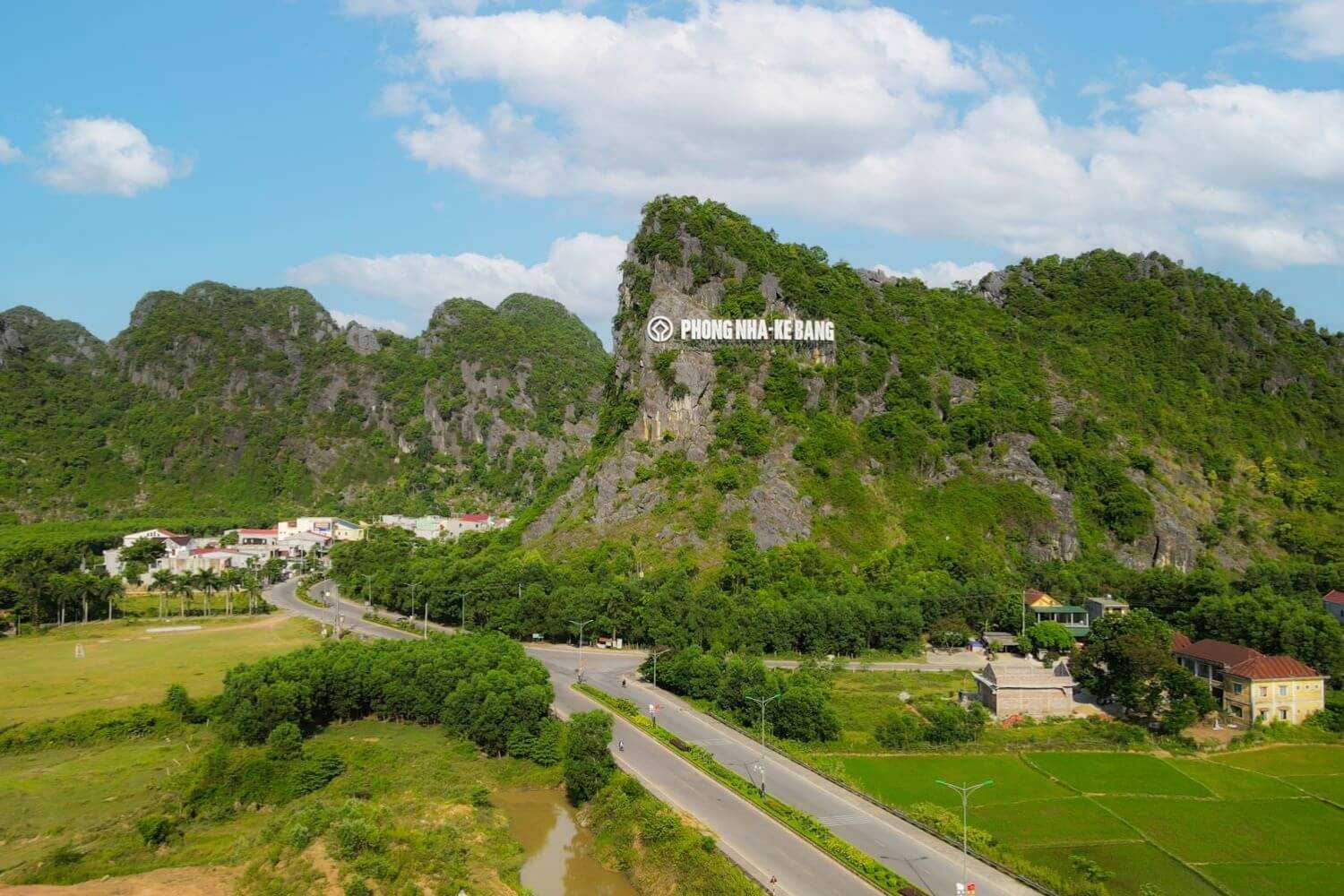
Located within the protected borders of the Phong Nha-Ke Bang National Park, the cave sits in the central province of Quang Tri (Old Quang Binh). To reach this natural wonder, travelers typically make their way to Dong Hoi, the closest major gateway city, before traveling the final 45 kilometers inland to the Phong Nha tourism center.
This is how you can travel from major cities to Dong Hoi
- From Hanoi: You can take a comfortable overnight sleeper train directly to the Dong Hoi Railway Station, which takes around 8 to 10 hours. Alternatively, several high-quality sleeper buses depart daily from Hanoi, winding down through the scenic highways. For those short on time, domestic flights connect Hanoi to Dong Hoi Airport in just over an hour.
- From Ho Chi Minh City: Because of the long distance, flying is the fastest and most convenient option. Regular domestic flights connect Tan Son Nhat Airport to Dong Hoi Airport in about 1 hour and 35 minutes. For budget travelers who have more time, overnight sleeper trains and long-distance buses are also available, though the journey takes around 22 to 24 hours.
- From Hue: The historical city of Hue is relatively close, making it an easy jumping-off point. A standard bus or private transfer from Hue to the Phong Nha area takes approximately 3 to 4 hours, taking you past historic wartime landmarks like the Long Dai ferry station.
- From Da Nang or Hoi An: If you are traveling from Da Nang or Hoi An, the train is an incredibly scenic option, taking roughly 5 to 6 hours to reach Dong Hoi. Regular tourist buses also run this route daily, providing a direct connection between the coastal beaches and the limestone karst mountains.

Once you arrive at Dong Hoi Airport, Railway Station, or the city bus terminal, you can easily get to Phong Nha Center using one of these simple options:
- Local Public Bus (Route B4): The most affordable option. It runs regularly throughout the day, costing around 40,000 VND to 50,000 VND. The trip takes about 70 to 90 minutes.
- Taxi or Private Car: Ready and available at the airport or train station. A one-way ride costs between 400,000 VND and 550,000 VND and takes just 45 to 50 minutes.
- Motorbike Rental: You can rent a bike in Dong Hoi for 150,000 VND to 200,000 VND per day. Riding via Highway QL16 is direct, scenic, and takes about 1 hour.
> Read more: How to get to Blue Diamond Retreat
The History and Geology of Phong Nha Cave
Stepping inside Phong Nha Cave is like walking through a living museum carved by the hand of time itself. The geological evolution of this massive cavern spans hundreds of millions of years, leaving behind an intricate subterranean network that has played a vital role in human history and international conservation.
Millions of Years in the Making
The park’s limestone karsts began forming over 400 million years ago. They create one of Asia’s oldest karst regions. Over millennia, powerful underground rivers carved through the calcium carbonate. This dissolved the bedrock, hollowing out massive chambers. Water continuously drips through the cave ceilings. It deposits minerals to build breathtaking rock formations growing mere millimeters each decade.
A History of Discovery and Cultural Identity
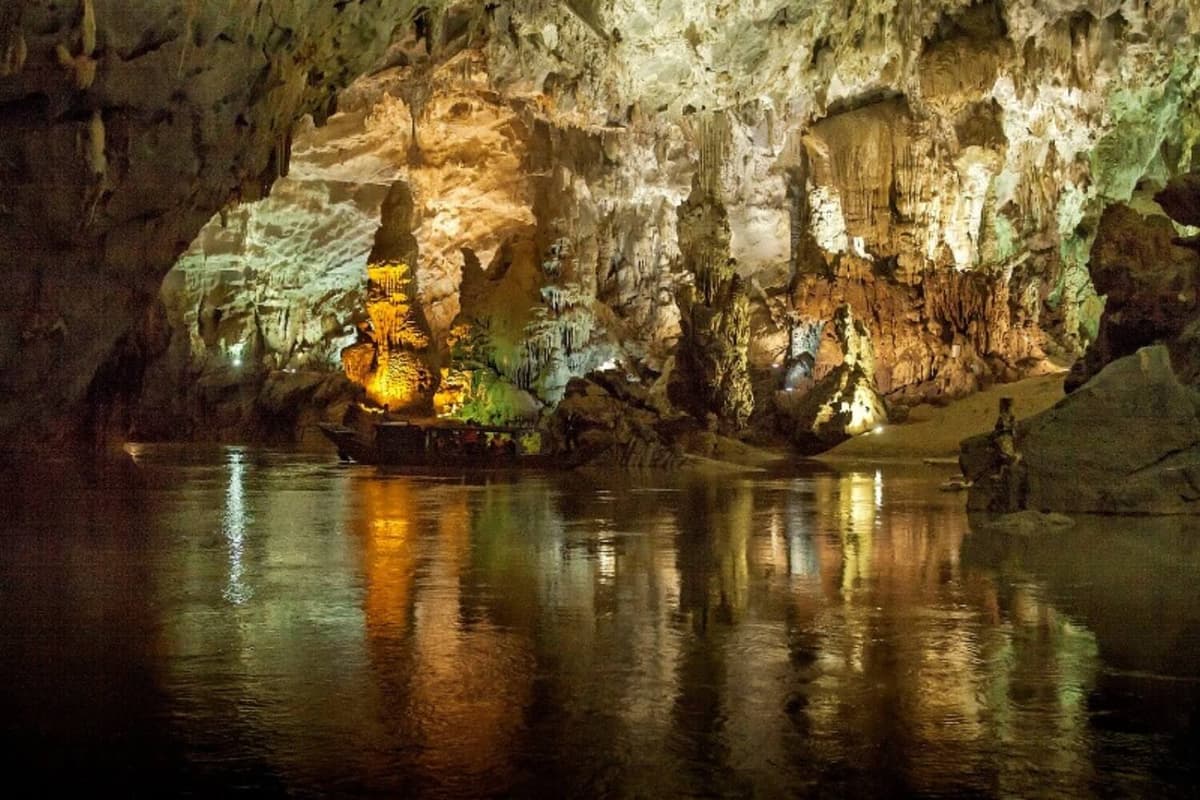
The name “Phong Nha” translates poetically to “Wind and Teeth,” a reference to the dramatic limestone spikes that guard the cave’s mouth, looking much like a mythical dragon’s jaw or a row of teeth silhouetted against the sky.
While local communities have known of the cave for centuries, it gained international prominence through colonial-era explorations and subsequent expeditions led by the British Cave Research Association. Long before modern explorers arrived, the ancient Cham people used these hidden sanctuaries for religious rituals, leaving behind mysterious inscriptions and historical relics carved directly into the stone walls of the Bi Ky chamber.
Wartime Sanctuary and Global Recognition
During the fierce conflicts of the 20th century, the cave served a crucial tactical purpose, transforming into a bombproof shelter, a concealed floating hospital, and a secure storage facility for supplies moving along the Ho Chi Minh Trail.
Its cultural and environmental significance culminated in a massive victory for global conservation when the surrounding park was officially designated a UNESCO World Heritage Site. This prestigious status ensures strict environmental protections, preserving its unique ecosystem for future generations of travelers.
Why Phong Nha is Crowned the “First Wonder of Southern Caves”
According to historical evaluations and explorations by the British Cave Research Association, Phong Nha Cave is crowned the “First Wonder of Southern Caves” because it holds 7 outstanding records (the “seven bests”):
- Longest underground river: The cave contains a magnificent, active subterranean river system stretching over nearly 8 kilometers.
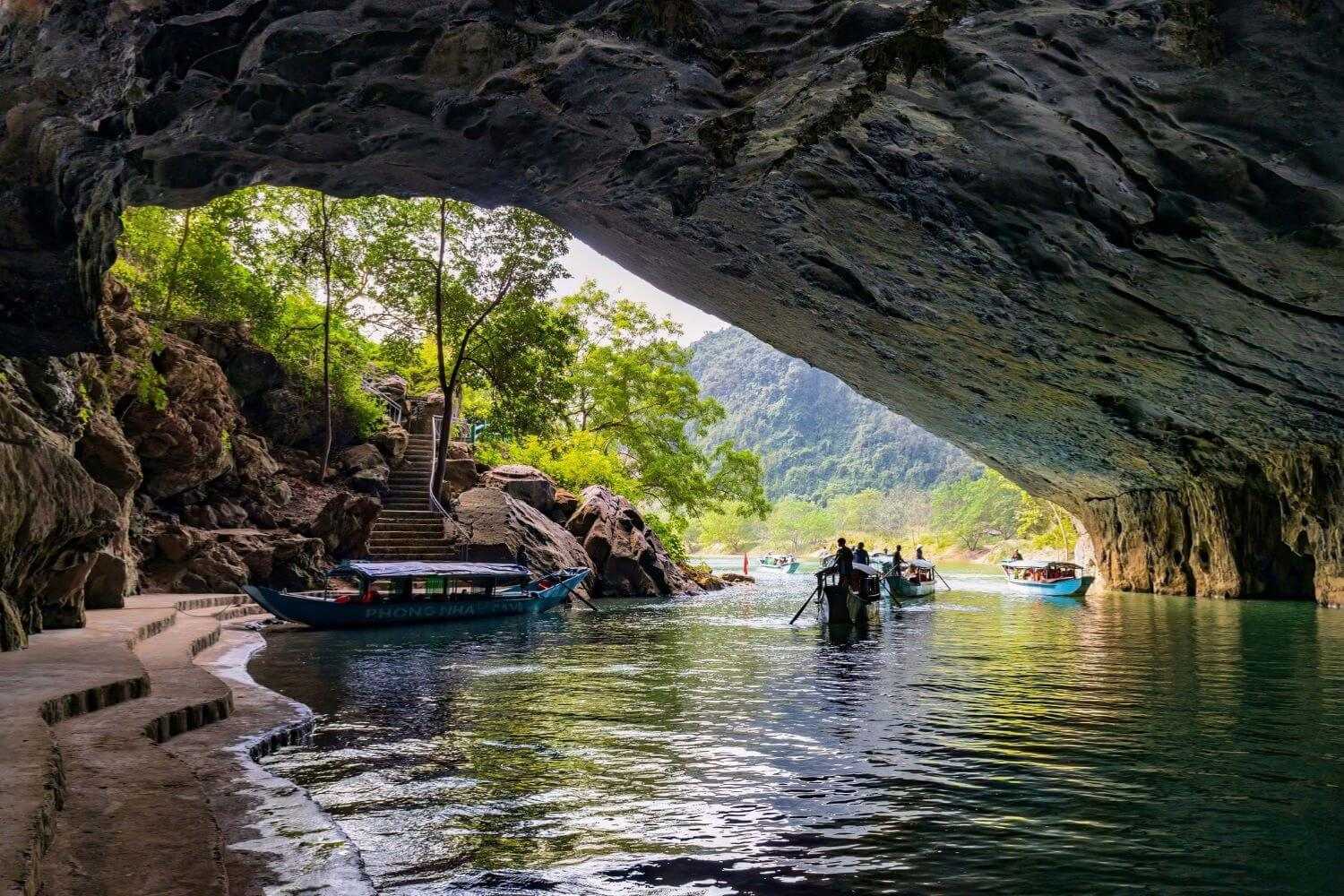
- Highest and widest cave entrance: The towering mouth of the cave acts as a massive natural gateway, measuring up to 20 – 22 meters wide and 10 meters high.
- Widest and most beautiful sandbanks and reef banks: Inside the cavern, natural water currents have deposited spectacular, expansive stretches of clean sand and unique rock beaches.
- Most beautiful underground lake: The cave features stunning, crystalline subterranean lakes that mirror the surrounding limestone architecture in the pitch-black chambers.
- Most magnificent and widest dry cave: The upper sections, including connected dry systems like Tien Son, offer vast, airy vaults filled with pristine geological formations.
- Most spectacular and surreal stalactite system: It boasts an unparalleled display of giant, glittering stalactites that form mesmerizing shapes like royal curtains and mythical creatures.
- Longest water cave: The expansive wet passages create a record-breaking, continuous aquatic cave system that remains the crown jewel of global karst geography.
What to Expect Inside Phong Nha Cave
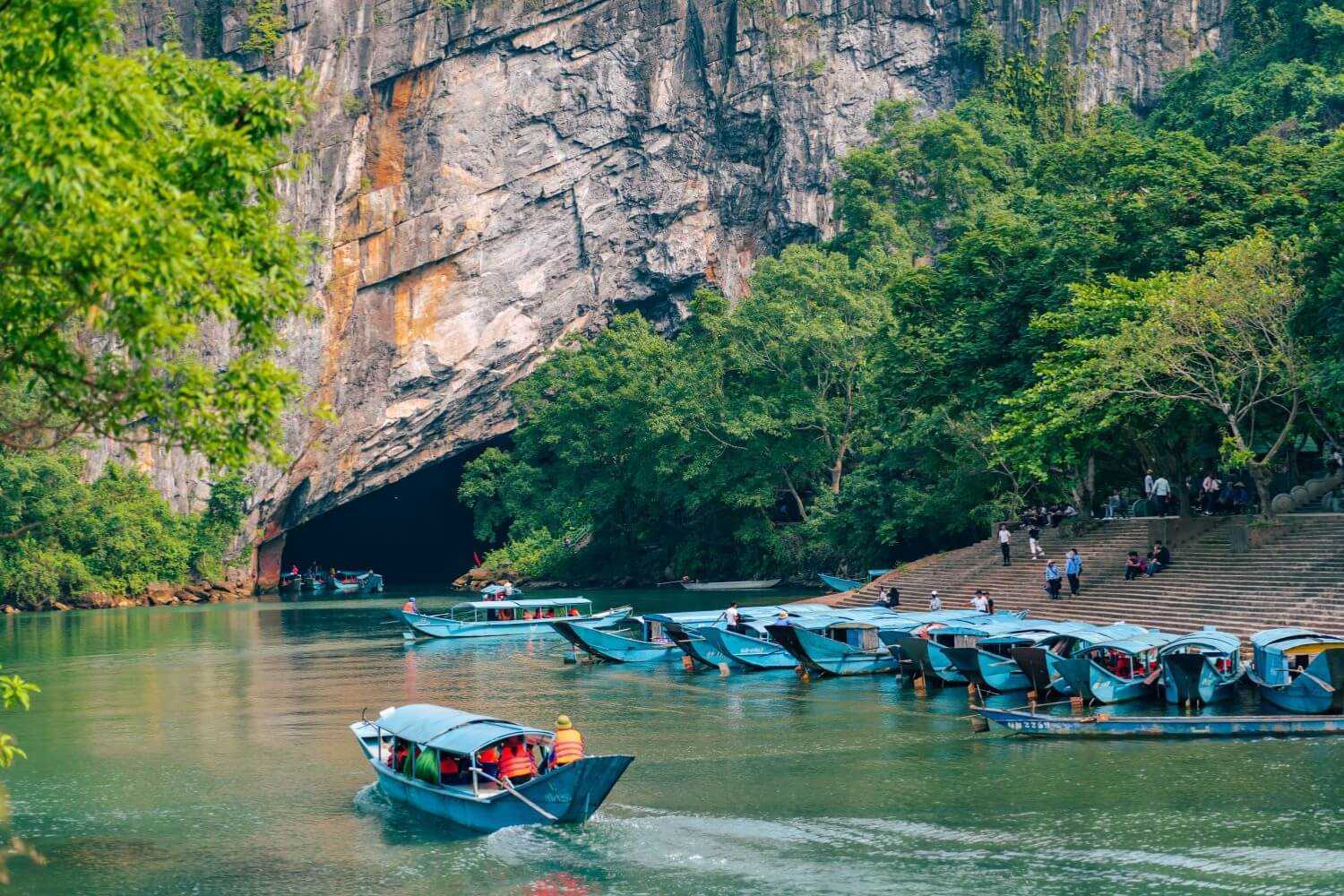
Your adventure begins at the tourism boat berth, where you board a traditional wooden dragon boat. The boat takes you on a scenic 30-minute cruise along the poetic Son River. You will pass vibrant green cornfields, grazing water buffalo, and traditional riverside villages.
As the boat enters the cave mouth, the operator cuts the loud diesel engine completely. The crew transitions entirely to manual paddle power to protect the fragile cave ecosystem. Gliding silently through the darkness, you will hear nothing but the gentle splash of oars. You will also notice the magical underground river displays a jade-green color during the dry season. During the rainy season, the water turns a distinct reddish hue.
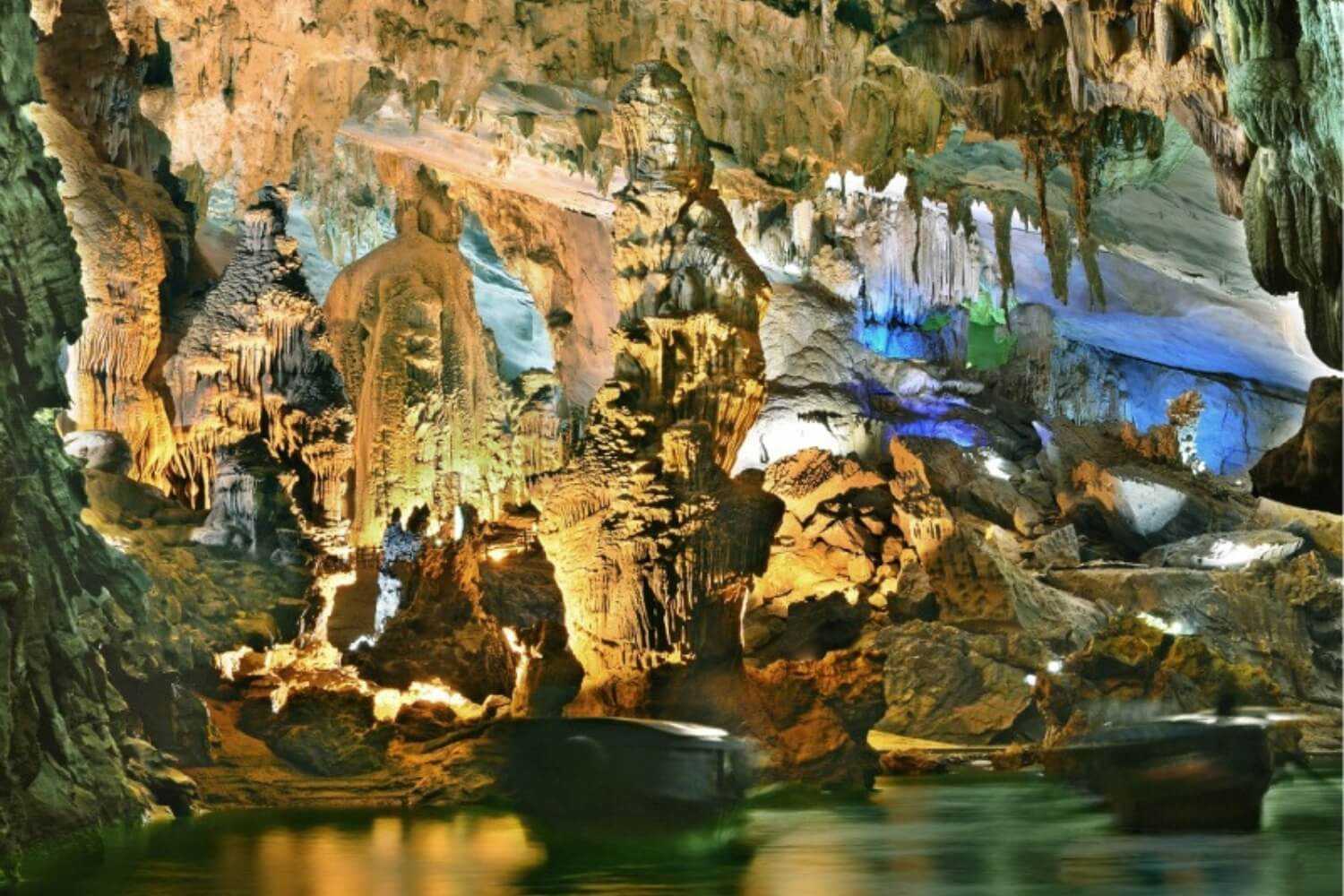
Inside, you will admire unique limestone formations named after their shapes like “The Lion,” “The Unicorn,” “The Royal Court,” and “The Buddha Statue.” The boat eventually docks on an interior sandbank so you can explore on foot. A beautifully constructed wooden boardwalk winds through the massive Bi Ky chamber, where you can see the Avalokitesvara Statue, Rong House Roof, Tien Sa Sandbank, and the Ancient Jar.
On the return journey, you will explore two beautiful dry branches: Tien Cave and Royal Palace Cave. The composite-material walkway system lets you safely marvel at the Golden Bell, Fairy Maiden’s Chamber, Fairy Maiden’s Hair, the King’s Bed, and the natural terraced fields. At the end of the walking tour, you return to your assigned boat to cruise back.
Phong Nha Cave Entrance Fee, Boat Price and Opening Hours
The standard Phong Nha Cave entrance ticket costs 150,000 VND per adult. Children under 1.3 meters tall enter free of charge.
The mandatory round-trip boat transportation costs 700,000 VND per boat for up to 12 passengers. If you combine your trip with Tien Son Cave, the boat price is 750,000 VND. Small groups can share a boat at the station to split the cost to 60,000 VND each.
You can hire a local tour guide directly at the counter. A Vietnamese-speaking guide costs 300,000 VND for one cave and 400,000 VND for two caves. English-speaking guides cost 400,000 VND for one cave and 500,000 VND for two caves. Thrill-seekers can also choose the 4,500-meter adventure or the nighttime exploration tour.
Phong Nha Cave is open daily, but operating hours change slightly depending on the season. During summer, the cave opens from 7:15 AM to 4:30 PM. In winter, the hours shorten from 7:30 AM until 3:45 PM. A standard tour takes about 2.5 hours in total. Please note the ticket counters only accept cash and do not support online bookings.
Essential Travel Tips for Phong Nha Cave
A successful exploration of this ancient subterranean world depends heavily on preparation and an understanding of the local environment. Using this curated checklist and safety overview will keep you safe, comfortable, and ready for adventure.
Best Time to Visit and Weather Warnings
The best time to explore Phong Nha Cave runs through the dry season, spanning from April to August. During these summer months, the weather is beautifully sunny, and the Son River runs incredibly clear and low, providing flawless and safe access deep into the cave chambers.
International travelers must be acutely aware of the intense central Vietnamese rainy season, which strikes heavily from mid-September through November. This period brings severe monsoon rains and occasional tropical typhoons that cause the Son River to rise rapidly, completely submerging the cave entrance.
When this happens, Phong Nha Cave will close completely to all tourists for days or even weeks at a time. Always check real-time weather forecasts and operational updates if you plan to travel during late autumn.
Preparation Checklist from A to Z
- Documentation: Ensure your passport is secure and keep a digital copy of your approved Vietnamese Visa handy on your phone for local hotel registrations.
- Footwear: Wear lightweight, high-traction sneakers or sturdy sports sandals with straps, as the wooden boardwalks and interior sandbanks can become quite slick from humidity and dripping water.
- Clothing: Dress in breathable, moisture-wicking layers; while the outside air can be intensely hot in the summer, the cave interior remains naturally cool.
- Sun and bug protection: Bring a wide-brimmed hat, polarized sunglasses, and reef-safe sunscreen for the exposed river cruise, alongside a reliable insect repellent.
- Gear and power: Keep your smartphone or camera charged, and carry a compact power bank, as the low-light environments inside the cave will tempt you to take endless photos.
- Emergency cash: Keep an adequate stash of physical cash (VND) in a waterproof bag for small tips, snacks, and local transport options.
Where to Stay and What to Eat
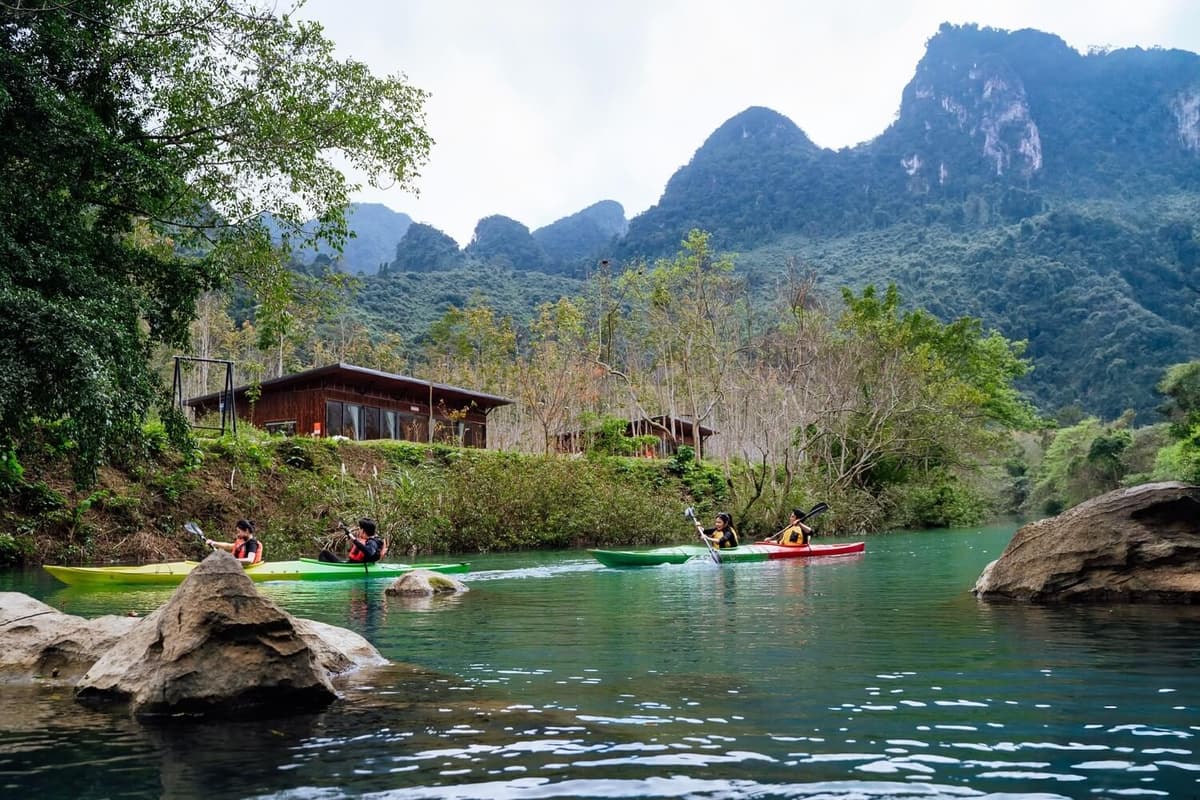
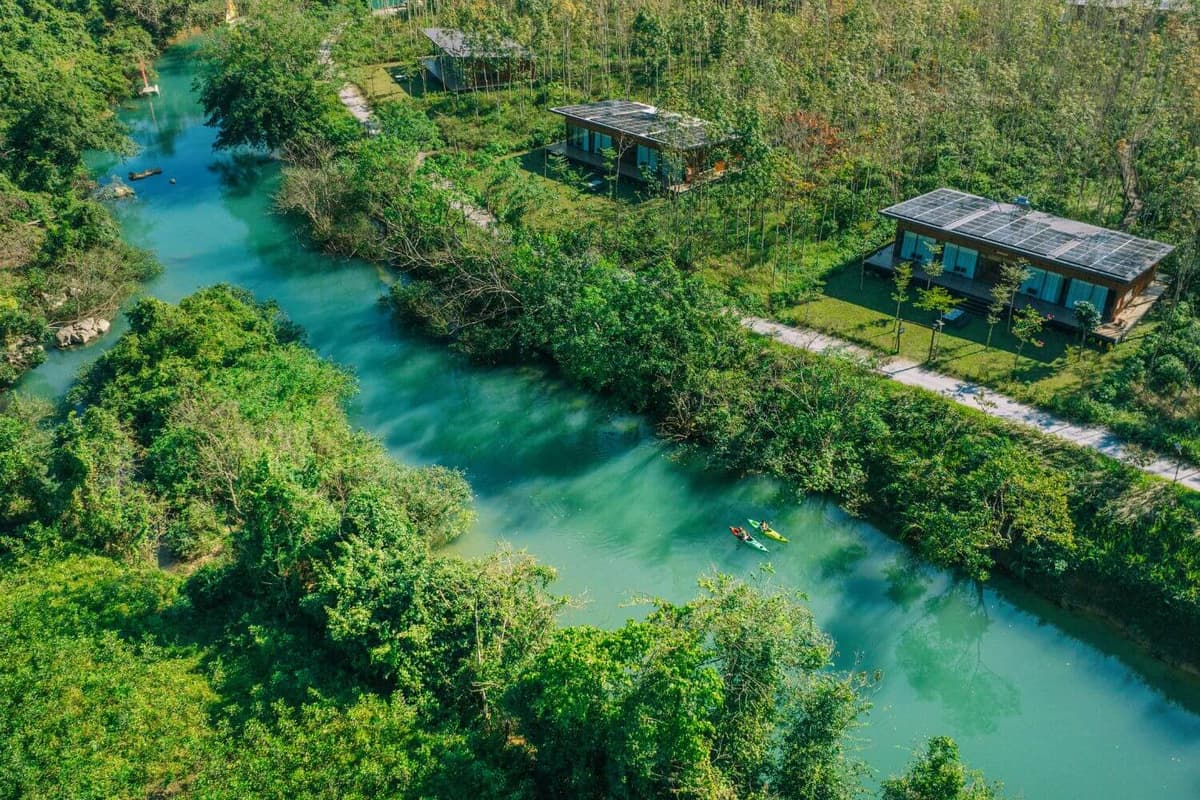
The hospitality scene in Phong Nha has expanded beautifully, offering accommodation styles that cater to every taste and budget. For an immersive, eco-friendly luxury experience, properties like the Blue Diamond Retreat or the Chay Lap Farmstay offer spectacular accommodation options nestled amongst lush gardens, organic farms, and winding rivers. If you prefer a social vibe, the main Phong Nha town strip is packed with highly rated riverside homestays and lively hostels run by incredibly welcoming local families.
When it comes to local cuisine, the region serves up bold, unforgettable flavors that reflect the geography of central Vietnam. You absolutely must try the famous local charcoal-grilled chicken served with wild leaf dipping salt, or sit down for a steaming bowl of chao canh (a thick, comforting noodle soup packed with fresh river fish or pork). Other highlights include crispy banh xeo (savory crepes), fresh lemongrass river snails, and wild boar slow-roasted over open fires at local family-run eateries along the riverbanks.
Dynamic Nearby Attractions to Pair with Your Visit
To maximize your time in the national park, you can easily combine your visit to Phong Nha Cave with several incredible nearby destinations:
- Tien Son Cave: Located right above Phong Nha Cave, this dry cavern features spectacular views of the valley and stunning thạch nhũ formations.
- Phong Nha Botanical Garden: A lush rainforest sanctuary featuring walking trails, a majestic waterfall, and opportunities to spot local wildlife.
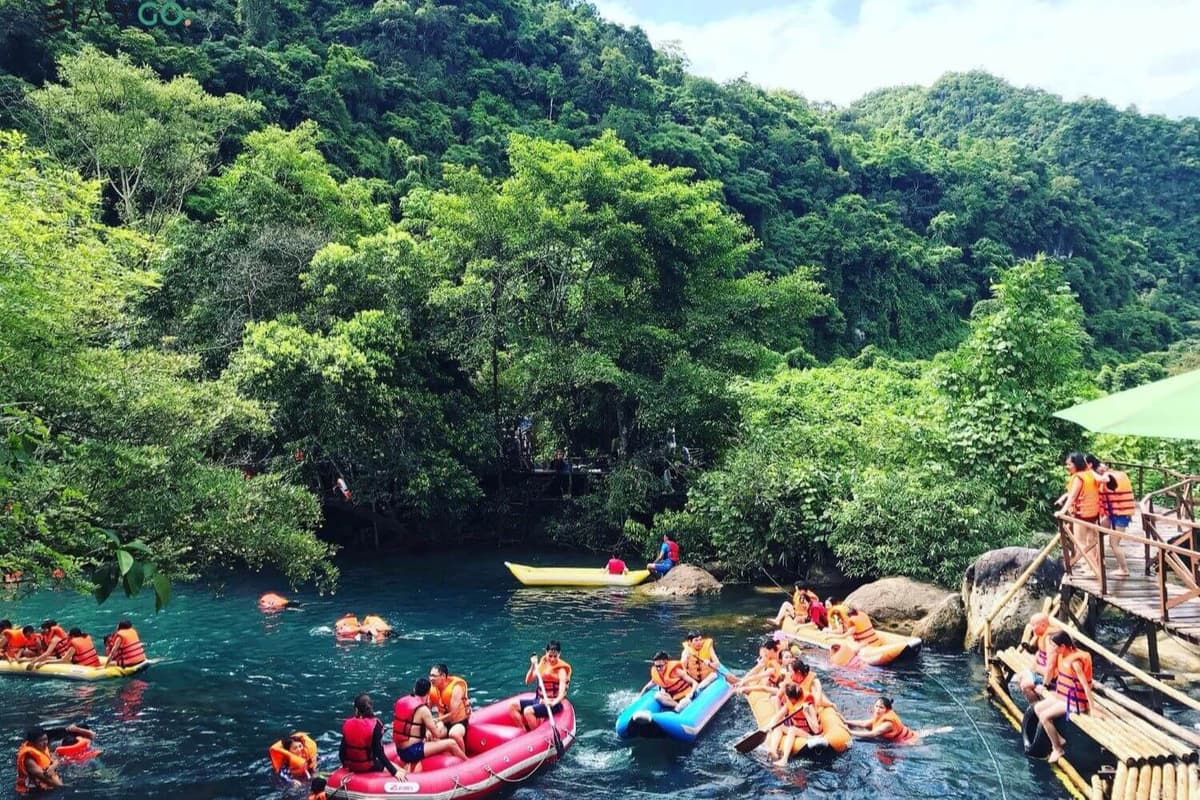
- Chay River and Dark Cave (Song Chay – Hang Toi): An action-packed site offering ziplining over turquoise waters, kayaking, and a fun mud bath deep inside a dark cave.
- Nuoc Mooc Eco-Trail: A pristine, shaded jungle boardwalk winding over crystal-clear, ice-blue karst springs that are perfect for swimming.
> Read more: 10 tourist attractions near Blue Diamond Retreat | Phong Nha-Ke Bang travel guide
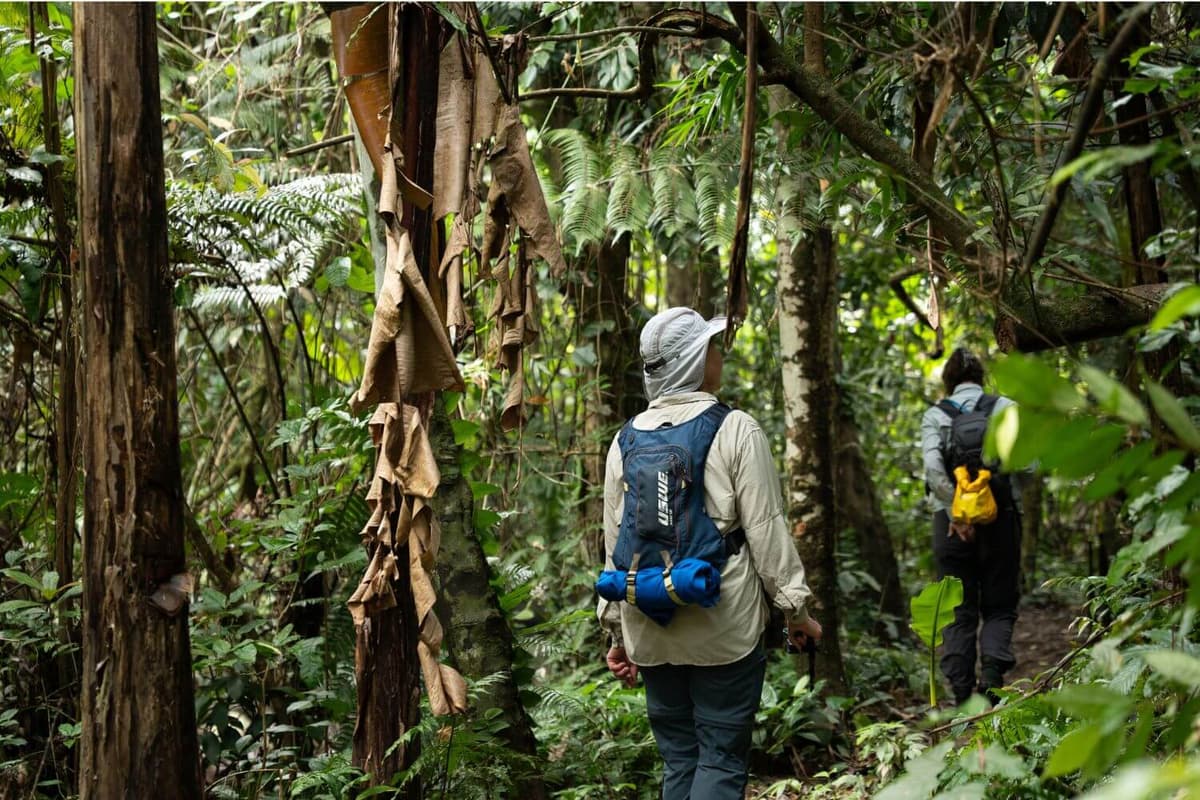
Advanced trekking outposts: For experienced hikers with flexible schedules, booking multi-day expeditions to remote spots like Hang En, Hang Va, or the historical Commander Cave Museum offers an unforgettable, deep-jungle wilderness adventure.