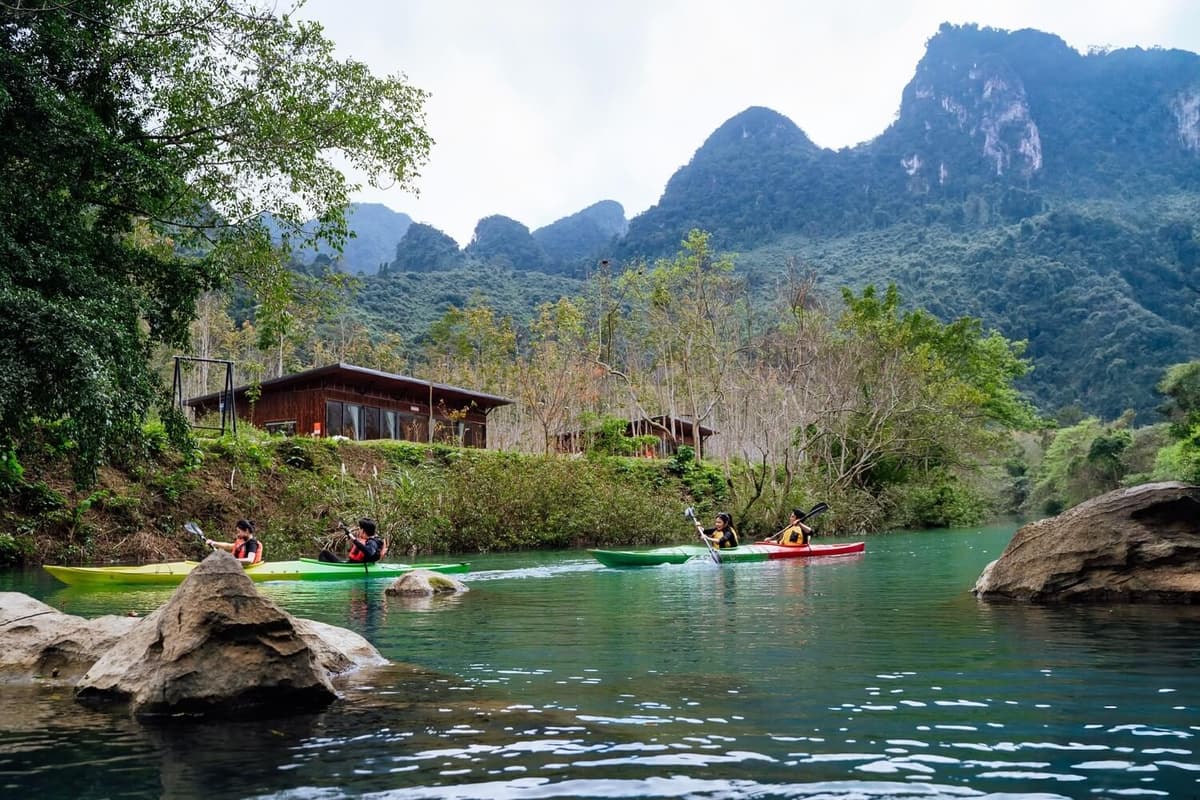
Khe Gat Airfield is the only wartime airfield ever built in the Truong Son mountain range. Today, the site has merged with the Ho Chi Minh Road, serving as a gateway to the Blue Diamond Retreat. More than half a century ago, from this hidden runway, two MiG-17 fighter jets of the Vietnamese Air Force took off and flew straight into the most powerful naval fleets in the world.
The battle, which lasted about 17 minutes, astonished even the most powerful military minds. They could not understand how two older-generation fighter jets managed to break through intense anti-aircraft fire and accurately bomb warships offshore.
Today, Khe Gat Airfield has been recognized as a National Historic Site and is now part of the Ho Chi Minh Road. It is also a place that travelers pass through on their way to Blue Diamond Retreat.
Background and construction of Khe Gat Airfield
From 1969, strategic supply routes along the Truong Son Trail and the Ho Chi Minh Sea Route were placed under constant threat of enemy fire. The Northern Vietnamese Air Force deployed jet aircraft to support these transport routes and defend the northern coastline.
Between late 1968 and 1969, Khe Gat Airfield was constructed directly within the Truong Son mountain range. The Vietnamese army aims to create a strategic element of surprise in protecting vital supply routes and to share operational pressure with Dong Hoi Airfield.
The Vietnamese Army, youth volunteer forces, and local people from Xuan Trach Commune constructed the airfield in a narrow valley of the Truong Son range. Their work only began after nightfall. By early morning, the entire site was cleared and carefully camouflaged with forest vegetation to erase all traces.
Construction vehicles such as rollers and bulldozers had to be dismantled in Ha Noi. Each part was transported deep into the forest and hidden in limestone caves during the day to avoid aerial reconnaissance.
After around eight months, Khe Gat Airfield was completed with a runway approximately 2 kilometers long and 50 meters wide. It has a taxiway leading aircraft into a system of limestone caves for shelter.
From 1971, Vietnamese skies were filled with smoke and fire. The forests of Truong Son were lit by relentless bombardments. Coastal areas from Quang Binh to Hai Phong endured continuous artillery strikes. In that context, a bold strategy began to take shape.
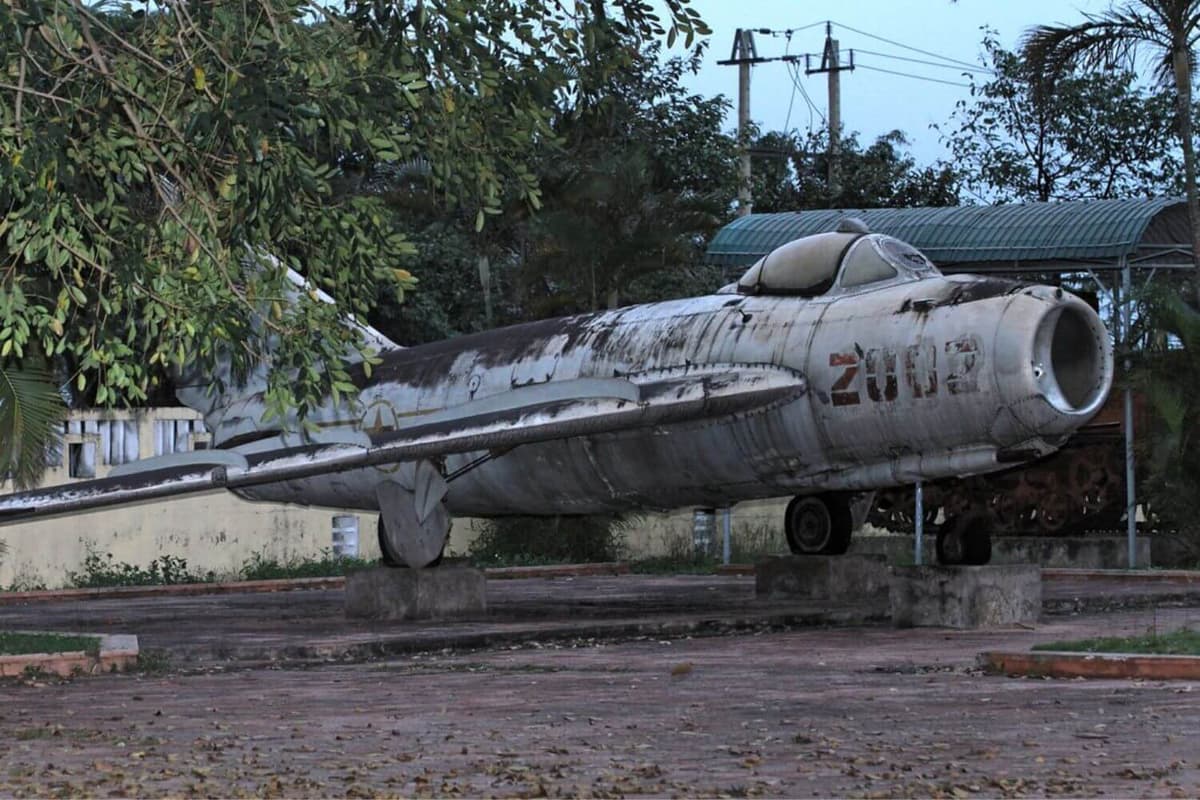
The command launched a training program for the Vietnamese Air Force in maritime flight and low-altitude bombing. Determined to push enemy firepower away from Vietnam’s coastline, Vietnamese forces planned a direct strike against the powerful and highly modern 7th Fleet.
On April 19, 1972, a flight formation led by Mr. Le Xuan Di and Mr. Nguyen Van Bay B took off from Khe Gat Airfield. They successfully bombed the destroyer escort USS Higbee and the guided missile cruiser USS Oklahoma City.
The remarkable air-to-ship battle by two Vietnamese Pilots
Two MiG-17 fighter jets of the Vietnamese Air Force approached the 7th Fleet formation in a tightly coordinated formation.
The command of the Vietnamese Air Force and Navy established a coordinated strategic network. It has a supporting command unit, an observation post at Cua Dinh, and Radar Station 403 for maritime surveillance at the mouth of the Nhat Le estuary. These forces worked together to study the operational patterns of the 7th Fleet and determine the most favorable moment to strike.
At around 3:00 PM on April 19, 1972, five groups of the 7th Fleet departed from the fleet to carry out strikes inland, while warships were intensively shelling Dong Hoi.
Seizing a gap in the fleet’s air defense system, the two pilots, Mr. Le Xuan Di and Mr. Nguyen Van Bay B, took off from Khe Gat Airfield in Quang Binh. They quickly identified the naval formation, located only about 12 kilometers from the coastline.
Mr. Le Xuan Di was the first to spot the naval formation and successfully released bombs that struck the destroyer USS Higbee. From another direction, Mr. Nguyen Van Bay B maneuvered through layers of anti-aircraft fire, missiles, and artillery. He delivered a direct bombing hit on the cruiser USS Oklahoma City.
In less than 17 minutes, the two pilots made history with Vietnam’s first air-to-ship combat victory, using low-altitude bombing techniques. Shortly after they landed, aircraft from the fleet launched airstrikes on Dong Hoi Airfield.
The following day, April 20, 1972, aircraft of the 7th Fleet continued bombing Vinh Airfield. It was not until April 22 that they discovered and attacked Khe Gat Airfield, damaging the runway and one MiG-17. Another MiG-17 was safely relocated to Gia Lam Airfield in Ha Noi.
Behind this achievement lies a lesser-known connection between two Vietnamese Air Force pilots who shared the same name. Mr. Nguyen Van Bay A, from Dong Thap, who was an ace credited with shooting down seven aircraft, pioneered the strategy of maritime flight training. Meanwhile, Mr. Nguyen Van Bay B, from Bac Lieu, was one of the two pilots who directly turned that strategy into reality.
Both Air Force heroes made significant contributions to the country’s independence and helped create legendary achievements that left a lasting mark on Vietnam’s history.
How to get to Khe Gat Airfield and Blue Diamond Retreat
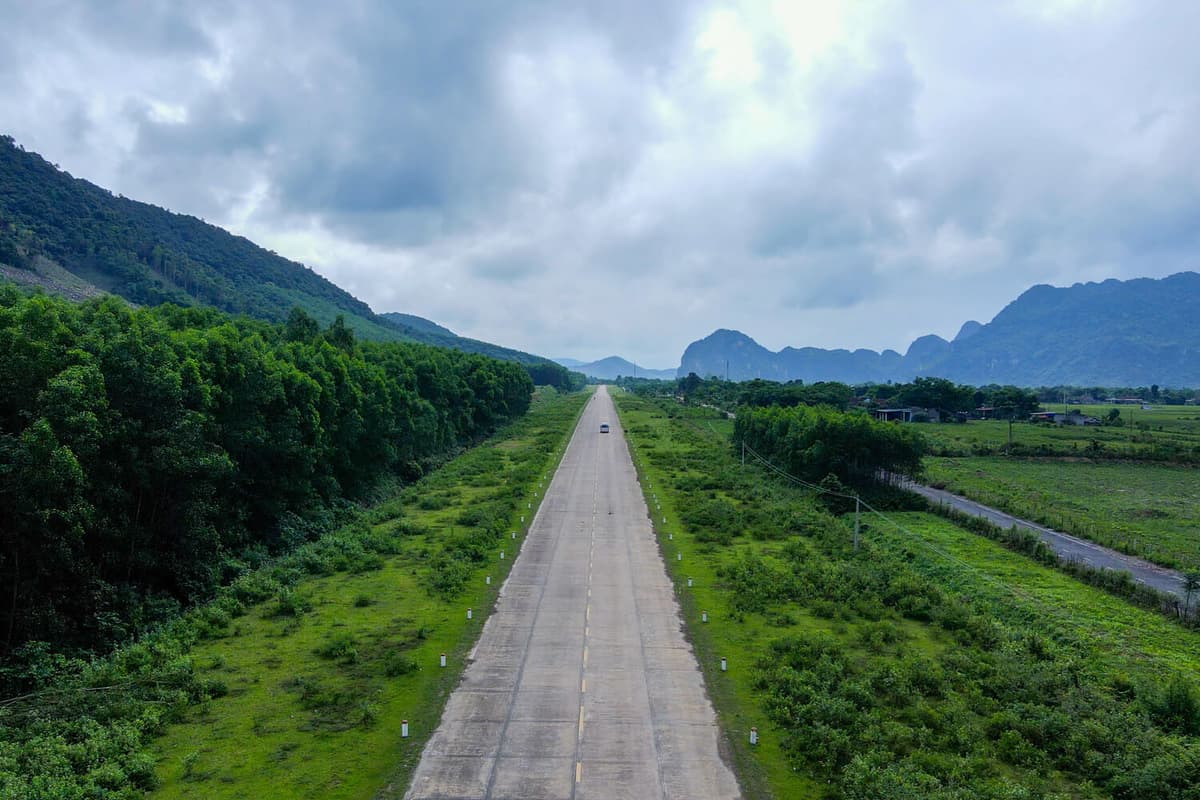
From the center of Phong Nha, travelers can reach Khe Gat Airfield by car or motorbike, traveling about 15 kilometers northwest along the Ho Chi Minh Road. The route is relatively flat, with scenery gradually transitioning from town to rural villages and forested mountains.
As they approach Blue Diamond Retreat, about 3 kilometers away, travelers will notice a stretch of road that is nearly twice as wide and remarkably flat amid the surrounding hills. This is a visible trace of the former runway, once compacted and built by Vietnamese forces.
The historical marker of Khe Gat Airfield is located near the turn leading to Khe Gat Village and Blue Diamond Retreat. Travelers can stop to visit the monument and read the historical information about the former wartime airfield. They can enjoy panoramic views of Khe Gat Village along with expansive fields stretching across the valley.
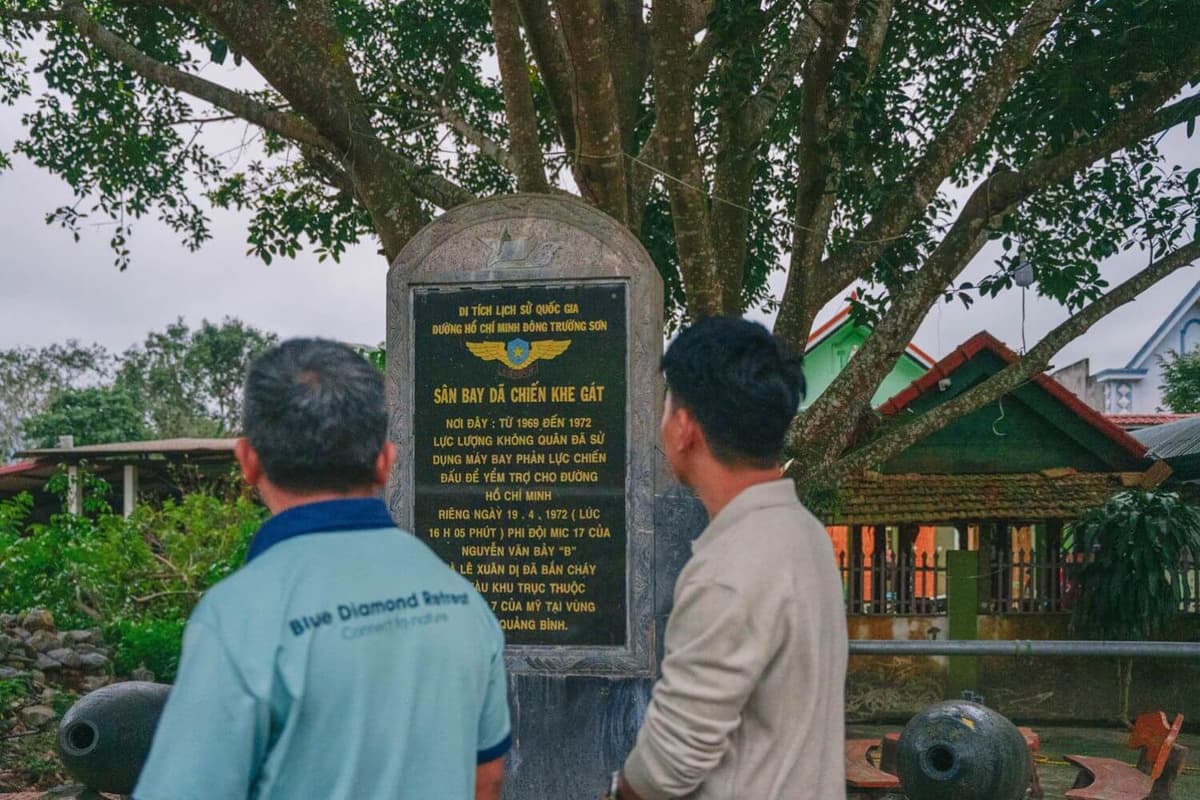
When staying at Blue Diamond Retreat and joining the “ Local home dining experience”, local guides will take travelers to visit Khe Gat Airfield and share its historical stories. Travelers will explore Khe Gat Village and the airfield site by electric cart or bicycle, then continue to a local home for cultural exchange and to enjoy traditional regional dishes.

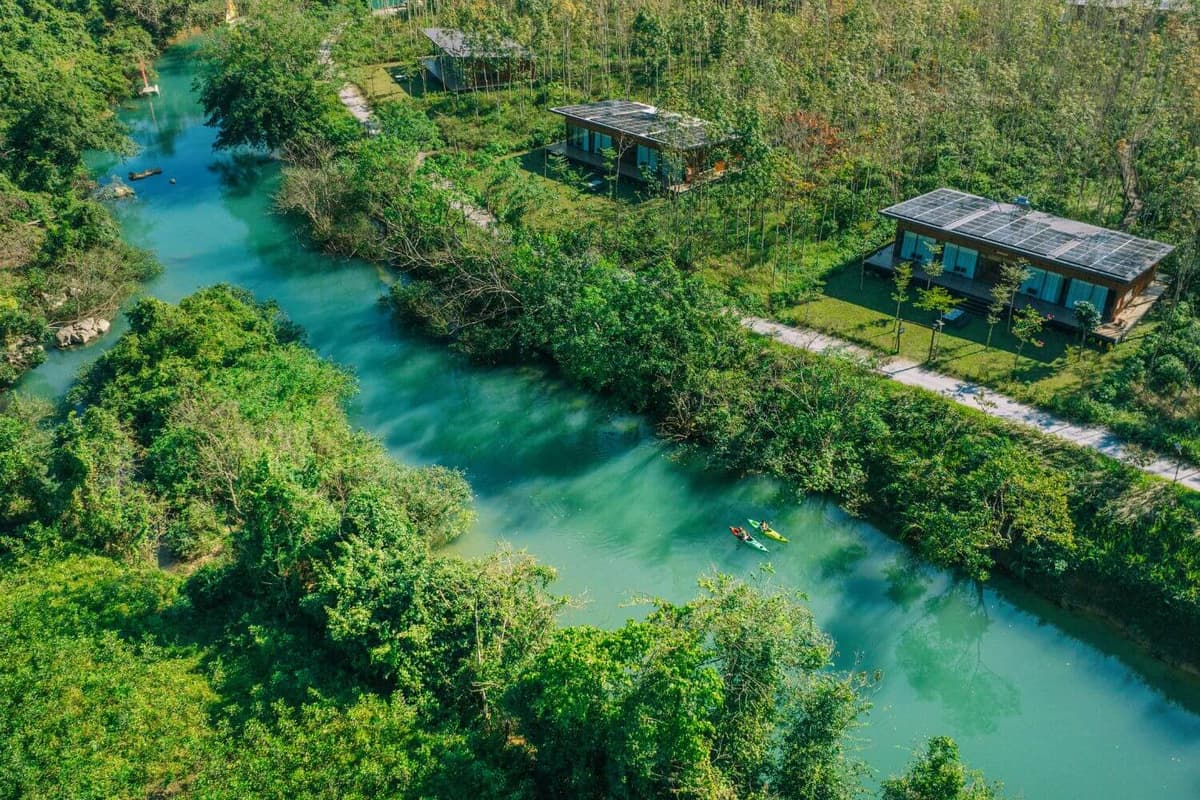
Blue Diamond Retreat is set within a 5-hectare forest, embraced by the winding Blue Stream. It creates a secluded space for relaxation and recreation away from the outside world. Travelers can immerse themselves in nature through activities such as walking through the forest, cycling, kayaking, swimming in the stream, etc.
Two accommodation options are Jungle Bungalows and Eco Houses. The rooms are designed with flexibility to suit couples, families, and larger groups of friends, while prioritizing privacy and a close connection with nature.
Nearby attractions to combine with a visit to Khe Gat Airfield
Travelers can easily connect their itinerary with a variety of notable attractions in Phong Nha, creating a well-balanced experience that blends history, nature, and recreational activities.
Phong Nha Cave
Located in Phong Nha town, about 18 kilometers away, Phong Nha Cave is a well-known destination featuring a boat journey along the Son River. Travelers will explore the river cave, closely associated with the heritage site of Phong Nha – Ke Bang. Depending on their schedule, travelers can conveniently visit the cave either before or after Khe Gat Airfield.
Paradise Cave and ecotourism areas in Phong Nha
Located about 21 kilometers from the airfield, Paradise Cave offers a gentle trekking experience to explore one of Asia’s largest dry caves. This cave is known for its impressive system of stalactites and stalagmites in diverse shapes and massive sizes.
In addition, nearby attractions such as Dark Cave (14 km), Hava Valley, Mooc Spring, and Ozo Park are ideal options for balancing historical exploration with relaxation in nature.
Historical sites in Phong Nha
Travelers interested in exploring the historical side of Phong Nha can follow Victory Road 20. They can learn about the construction and defense of this vital supply route through the vast Truong Son mountains.
Located about 25 km from Khe Gat Airfield, Hang Chi Huy once served as the headquarters of the Truong Son Command and a major logistics depot. Today, it has been restored into an engaging historical site. Visitors can explore its past through 9D VR experiences, the seven-storey cave system, and curated historical materials.
About 3 km away, Hang Tam Co is a spiritual site that commemorates the sacrifices made during the war. It honors eight youth volunteers and five artillery soldiers who lost their lives while carrying out missions to protect this vital route.
Tips for visiting Khe Gat Airfield
Today, Khe Gat Airfield has become part of a public traffic route along the Ho Chi Minh Road, so travelers can visit the site freely.
The ideal time to visit Phong Nha and explore Khe Gat Airfield is from March to August. During this period, the weather is generally dry with many sunny days. It is suitable for travel and for combining visits to popular attractions and cave exploration in Phong Nha – Ke Bang National Park.
From September to February, the forested mountain landscape takes on a more poetic and slightly mystical beauty, especially on misty days. However, travelers are advised to check the weather in advance to avoid rainy periods.

Travelers are recommended to visit Khe Gat Airfield in the early morning or late afternoon. At this time, the sunlight is softer, the air is cooler, and visibility opens up to clear panoramic views of Khe Gat Village and the surrounding Truong Son mountains. This is also the best time for photography and to fully appreciate the peaceful atmosphere of the buffer zone of Phong Nha – Ke Bang National Park.
In terms of clothing, travelers should prioritize comfortable and practical outfits for easy movement, especially when combining visits with relaxation at Blue Diamond Retreat or nearby attractions in Phong Nha.
If the itinerary includes spiritual sites such as Eight Ladies Cave, modest and respectful attire is recommended to suit the sacred atmosphere.